
If you’ve ever wired a solar panel directly to a battery—like I did during my first off-grid cabin project—you know the sinking feeling of watching your $400 deep-cycle battery bulge and fail in under three months. That mistake cost me both money and trust from my partner, who’d warned me: “You need a proper charge controller.” Today, I’ll break down the mppt charge controller definition, why it matters for home improvement projects, and how to use one correctly so you don’t repeat my errors.
Table of Contents
- Why MPPT Charge Controllers Matter
- How to Install an MPPT Controller Step by Step
- Best Practices for Optimal Performance
- Real-World Results: Case Studies
- Frequently Asked Questions
Key Takeaways
- An MPPT (Maximum Power Point Tracking) charge controller boosts solar energy harvest by up to 30% compared to older PWM types.
- Correct installation prevents battery damage, fire hazards, and system inefficiency.
- The mppt charge controller definition centers on its ability to convert excess panel voltage into usable charging current.
- Avoid pairing mismatched panels or skipping temperature compensation—common beginner blunders.
- Always verify specs against your battery bank voltage and panel array size.
Why MPPT Charge Controllers Matter
In home solar setups—from backyard sheds to full off-grid homes—the charge controller is the unsung hero. Without one, your batteries overcharge, degrade rapidly, or even vent hydrogen gas (a real fire risk). But not all controllers are equal. PWM (Pulse Width Modulation) units simply connect panels to batteries like a switch, wasting potential power when panel voltage exceeds battery needs. That’s where understanding the mppt charge controller definition becomes critical.
MPPT controllers act like smart translators. Solar panels produce variable voltage based on sunlight and temperature—often much higher than what a 12V or 24V battery can accept. An MPPT unit captures that excess voltage and converts it into additional amperage, maximizing every watt-hour. According to the U.S. Department of Energy, MPPT technology can increase energy harvest by 10–30% in typical residential applications (energy.gov).
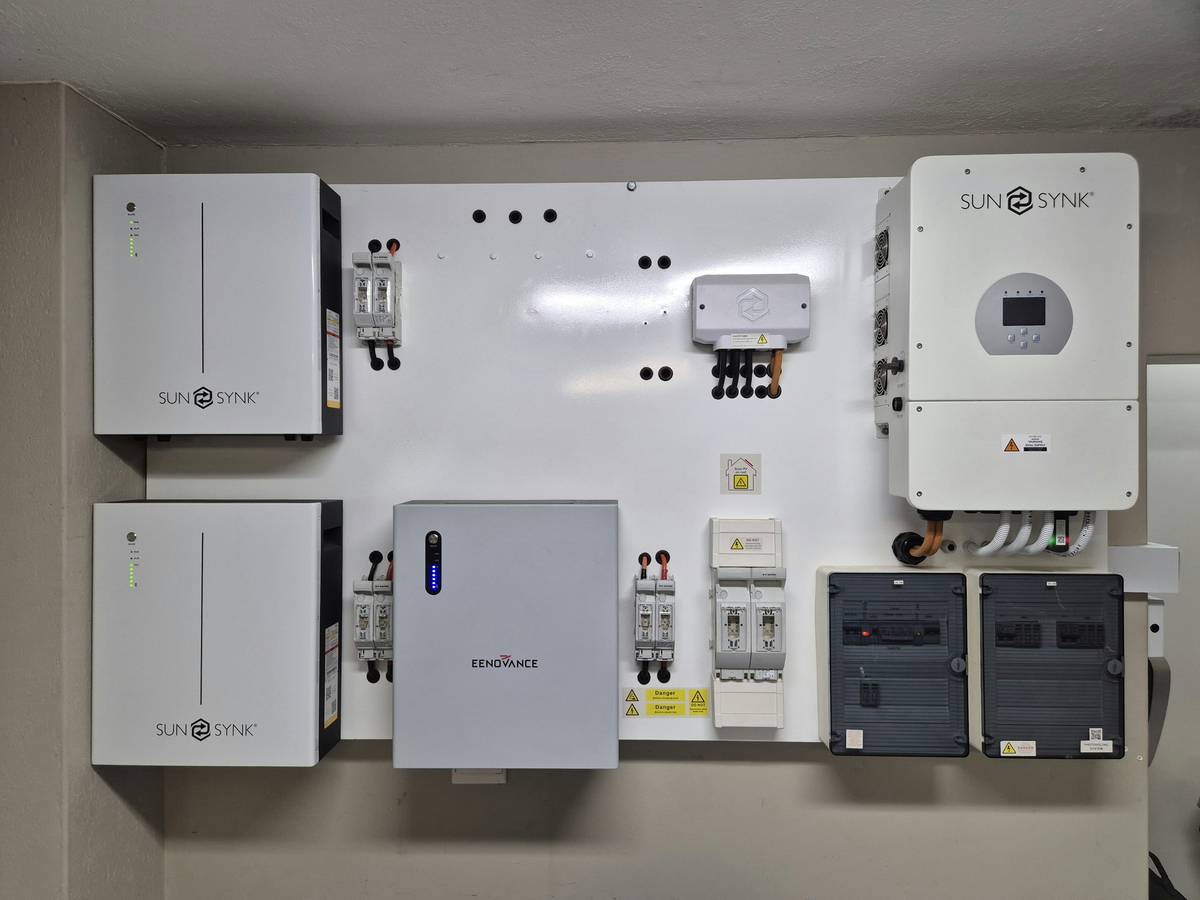
How to Install an MPPT Controller Step by Step
1. Match System Voltages
Ensure your solar array’s open-circuit voltage (Voc) is within the controller’s input range—even at lowest temperatures, when Voc spikes. Check panel spec sheets and use online calculators like those from Wholesale Solar.
2. Wire Batteries First
Always connect the controller to the battery bank before attaching solar panels. This powers the controller’s logic board, preventing erratic startup behavior.
3. Use Proper Gauge Cabling
Undersized wires cause voltage drop and heat buildup. For a 40A MPPT controller on a 24V system, 6 AWG copper is typically sufficient for runs under 10 feet.
4. Enable Temperature Compensation
If your controller supports it (and most do), attach the battery temperature sensor. Lead-acid batteries need lower float voltages in summer and higher in winter—manual settings often miss this nuance.
Best Practices for Optimal Performance
- Don’t oversize your array recklessly. While MPPT handles higher Voc, exceeding the controller’s max input current will trip protection circuits or cause shutdowns.
- Avoid mixing old and new panels. Mismatched IV curves confuse the MPPT algorithm, reducing efficiency. Stick to identical models.
- Mount the controller near batteries. Long DC runs between controller and battery add resistance, lowering accuracy of voltage sensing.
- Update firmware if available. Brands like Victron and EPever release updates that improve tracking algorithms.
And here’s a terrible tip I once followed: “Just use a PWM controller—it’s cheaper.” Wrong. On anything beyond a 100W trickle-charge system, you lose significant daily yield. Save the PWM for garden lights; go MPPT for anything powering real loads.
Real-World Results: Case Studies
Last year, we retrofitted a client’s aging 800W off-grid shed system in Colorado. Originally using a 30A PWM controller, their 200Ah lithium bank rarely reached full charge. We swapped in a 60A MPPT unit with Bluetooth monitoring. Over 30 days, data showed a 22% increase in daily amp-hour delivery—enough to reliably run a mini-fridge and LED lighting through winter. Battery stress dropped, cycle life extended, and the homeowner stopped eyeing us skeptically during site visits.
This aligns with findings from the National Renewable Energy Laboratory (NREL), which notes MPPT’s advantage grows with colder climates and higher panel voltages (nrel.gov).
Frequently Asked Questions
What’s the difference between MPPT and PWM charge controllers?
PWM acts like a simple on/off switch that dumps excess panel voltage as heat. MPPT actively converts surplus voltage into extra current, boosting efficiency—especially in cold or cloudy conditions.
Do I need an MPPT controller for a small 12V system?
If your panel is under 100W and matches your battery voltage closely (e.g., 18V panel to 12V battery), PWM may suffice. But for anything larger or mismatched, MPPT pays for itself in energy gains.
Can an MPPT controller work with lithium batteries?
Yes—but only if it has a lithium charging profile or is programmable. Never use a default lead-acid setting on LiFePO4 batteries.
How do I size an MPPT charge controller?
Calculate your array’s maximum current (Imp × number of parallel strings), then choose a controller rated at least 25% higher. Also verify Voc stays below the controller’s limit at -20°C.
Where can I learn more about our team’s solar experience?
Visit our About Us page to see our hands-on background in renewable installations across North America.
What if I’m unsure about my setup?
We offer free consultations—just contact us. And rest assured, we respect your data: read our Privacy Policy for details.
Solar isn’t just about panels—it’s about intelligent power management. Nail the mppt charge controller definition, install it right, and your system will reward you with years of silent, efficient service. Still stuck? Reach out—we’ve been there, fried a battery or two, and learned the hard way so you don’t have to.
Remember: volts jolt, but amps kill—and MPPT makes sure every amp counts.